
Get In Touch

You cannot manage what you have never looked at. An afternoon with a prompt list and a spreadsheet will tell you whether AI tools are recommending you, misrepresenting you, or skipping you, and each of those findings comes with a clear next step.

You need a PIM when product information has more consumers than your current systems can serve consistently, and when the cost of manual reconciliation, slow launches, and blocked AI initiatives exceeds the cost of doing it right. You do not need one to fix an ownership problem, and you should not start one mid-migration.

Quoting is not the reason your products cannot be sold online. Unexamined quoting workflows are. Sort your order volume honestly, move the standard majority to self-service, give the negotiated remainder a visible digital workflow, and measure quote abandonment the way you measure cart abandonment.

Replatforming does not have to cost you your search traffic or your place in AI answers. The teams that come through clean treat SEO and AI visibility as first-class requirements of the migration, with an owner, a checklist, and a monitoring window, not as a task for launch week.

B2B site search fails when it speaks catalog language instead of buyer language. The evidence is sitting in your search logs right now, and most of the fixes are content and configuration work, not a replatform.

Digital commerce projects stall because the return gets measured in the wrong place. Incremental online revenue frames the website as a channel competing with your sales team. Cost to serve frames it as capacity you are currently spending on order entry. One of those arguments makes reps resist. The other makes them advocates. How to build the case, and the four things that have to be true first.

Shopify B2B has closed most of the gaps that used to disqualify it for manufacturers and distributors. It has not closed all of them. Deeply configurable products, multi-stage quoting, and complex organizational hierarchies are still where the enterprise platforms earn their cost. A clear assessment of both sides, plus the four questions that produce an answer when feature checklists produce a tie.

Every AI demo in B2B commerce is buyer-facing. Agents drafting orders. Chat windows answering spec questions. The work that actually returns is none of those. It is catalog enrichment, and it is the only AI investment that makes every later one cheaper. Why the unglamorous use case wins, what the work involves, and the four controls that keep AI-generated product data from becoming a liability.

When a B2B buyer gets stuck on your site, they do not generally abandon the relationship. The site's conversion rate is technically unaffected, because the buyer never entered the funnel at all. Meanwhile a sales engineer spent part of their afternoon reading a spec sheet aloud. Your support volume is the usability report your analytics cannot produce. Here is how to read it.

Adobe's lifecycle documentation lists August 11, 2026 as the end of support for the Adobe Commerce 2.4.6 release line. If you are running 2.4.6, your store does not stop working that day. What changes is quieter and sometimes moreexpensive. New vulnerabilities discovered after that date do not get official patches. Your PCI posture starts drifting. Extension vendors begin testing against newer versions and stop testing against yours. Every future integration decision gets made around a platform version that is no longer moving.

We rank nine real use cases by whether they are delivering ROI in production today, whether they are conditionally working depending on the substrate underneath, or whether they remain experimental for most enterprise teams. The framing matters. Investing in a use case in the wrong bucket is how AI budgets quietly disappear in year two.

This article is written for architects, engineering leads, and the technical decision-makers responsible for designing the systems underneath AI commerce. It assumes familiarity with B2B commerce platforms, integration patterns, and data architecture.

July 10, 2018
It seems silly posting about Holiday 2018 when we are sitting poolside and the kids are out of school. But continuous innovation never stops. Harnessing data from Holiday 2017 and these past quarters to begin to compile profiles of your buyers and brainstorming themes for the upcoming 2018 holiday season is imperative and doesn't have to mean implementing a new technology or feature before the rush starts. Simple updates to your online checkout process and customer experience can help improve drop off rates and abandoned carts. And optimizing your order management and inventory can save you hundreds of thousands this holiday season. We could create a much more extensive list than 3 to prepare for holiday, but decided that these are a great place to start preparations as we kick off our Holiday Readiness Series. Utilize this short list to enhance your competitive edge this upcoming holiday shopping season and over the next three weeks look to the blog as we dive deeper into each of these three holiday readiness readiness tips.

June 26, 2018
Over the past four weeks, we have been discussing various hot topics in B2b Digital Commerce that our clients frequently ask us about. The Consumerism of B2b has lead to an expectation of a personalized, omnichannel purchasing experience with an equivalent level of choice, price transparency and service. This personalized expectation is not just about the shopping experience but also speaks to expectations around information consumption and device enablement. Pivoting into a modern and future-ready B2b commerce organization is complicated by both business process and technology, as there are many approaches and options. Expect these expectations will only grow stronger, and those able to digitally mature to offer these experiences will be seen as the industry leaders.

June 19, 2018
Welcoming change can be difficult. It’s human nature to enjoy the “comfort zone” and resist stepping outside of it. However, the most successful companies welcome change, seeing future unknowns as opportunities to disrupt and win. Committing to this type of mentality requires disruptive thinking, commitment across your entire organization, and creating a sound roadmap to guide the tactical execution of your winning strategy. At Echidna, we call this being future-ready. And the future comes fast in the digital age. Part of being future-ready means having the ability to change rapidly and regularly. Digitally mature companies regularly set goals, make plans, build solutions, change how they operate, and measure the results. If the results are good, they repeat. If they are bad, they change.

June 12, 2018
Customer expectations are rising across all industries and verticals. To retain business, B2b companies must embrace digitization. If you don’t offer a superior web, mobile, and conversational interface, your customers will look for the supplier that does.

June 4, 2018
Business to business in short means that products and services from one business are marketed to another business. But with different ways to go about transactions in business to business, the team at Echidna decided it should be expanded on further because certain businesses will require specific features, functionalities, or user experiences that others don’t. When discussing digital maturity and commerce, first decide- just what type of “b” are you?

May 29, 2018
When it comes to manufacturing, continual improvement has always been a common theme on the factory floor. But what about about the sales floor? How are you continually improving your customer experiences? How does your sales, support, and marketing operations look compared to your top competitors? To outpace your competitors and see continual growth it goes beyond being in the right market, offering excellent products and services, or simply being the lowest cost producer. This is because as competitors find increased mobility and expanded access to knowledge these once differentiators are quickly disappearing. Continually improving your sales, support, and marketing processes start with taking a look at your buyers and overcoming two common misconceptions around digital commerce for manufacturers.

January 30, 2018
Your company has been doing this for years and seen nothing but success. You created a website because "that's what you're supposed to do", but you depend solely on your sales reps because that site is more about offering information to your partners, not conducting complex transactions.

October 9, 2017
We know constituents in any B2B commerce construct (customers, business partners, colleagues, etc.) demand a familiar B2C experience, thus the need for organizations to pivot to B2B commerce.

June 21, 2017
From meeting your brand goals of multi-channel offerings, to strong personalized targeting, and the never to be forgotten site performance - the facets to review and understand when preparing for the holiday season are endless. And right now is a critical time to start planning and executing various aspects of your holiday planning. This doesn’t necessarily mean a complete website re-design or total back-office overhaul of systems. Instead, build on your existing merchandising and marketing to cater to holiday shoppers, offering them easy-to-find gifts for others (or themselves) with ease and convenience. Echidna calls attention to a few pieces of the digital puzzle to ensure our clients are planning not only for Summer or Fall, but for what many merchants call their bread and butter - holiday shopping season. Here are four hot topics to consider when planning for a strong digital holiday season.

October 27, 2016
Each year the holiday season brings new excitement and challenges for merchants. This year is a bit different. This is the start of an era in commerce where we will see the marketer evolve fully into the merchant role, and the consumer will be faced with what they have always wanted and seemingly feared: infinite choice. With infinite choice, it is more important than ever for merchants to take control of the experience being delivered to the consumer by their brand. If they don’t, the consumer will craft their own assumptions, which may or may not lead to a purchase and future brand loyalty.

April 7, 2016
When it comes to digital, one industry is making waves in how they are utilizing it. This industry may seem like an unlikely candidate for digital, as traditionally it was a very sensory experience — smelling, examining in all lighting conditions, the occasional taste test(?!), and of course lots of sampling. Alas, those days are largely in the past. What is this industry, you ask? Beauty.

March 31, 2016
Forget flipping through your Sunday paper to see what department stores are having sales. And no more grabbing Cosmopolitan magazine in the checkout aisle to be your main source of the latest fashion trends. Today’s consumer is smarter. Savvier. And online. All the time. From baby boomers to teenagers, the consumer now expects brands to know what they want before they know they even want it. This means even the previously traditional fashion sector is seeing a shift due to the digital disruption of a few perceptive incumbents. Here's a look at three very different sources of fashion and how they have each successfully embraced digital.

April 16, 2026
Enterprise eCommerce integration projects have a failure rate that the industry does not talk about enough. Failure as in the integration was built, went live, and then proceeded to quietly undermine the commerce experience it was supposed to power. These are not edge cases. They are the normal outcome of integrations that were designed without enough rigor, implemented without enough governance, or handed off to teams who lacked the context to maintain them.

March 15, 2026
Boomi is how Echidna builds that foundation. Not as a simple data pipe — but as the central nervous system of the enterprise, transforming and cleaning data in transit, enabling parallel workstreams, and making it possible to modernize legacy systems without replacing them.

July 1, 2024
Let’s debunk a popular myth before we start: Continuous innovation is not a one-off event or just a buzzword. It’s not about having that one groundbreaking idea that skyrockets your business to success. True innovation is a continuous process. It’s about applying strategic, tactical, and operational strengths consistently to prepare for future shifts. In a world where technology evolves at breakneck speed, staying relevant requires more than a flash of brilliance. It demands a relentless, ongoing commitment to change.

May 17, 2024
In recent years, voice search technology has transformed the way people interact with their devices and access information. This innovation allows users to search the internet, control smart home devices, and perform various tasks simply by speaking commands. Voice assistants like Alexa, Siri, and Google Assistant have become integral parts of our daily lives, making voice search an essential aspect of modern SEO strategies.

May 11, 2023
Throughout 2022 and early 2023, there was an explosion of generative Artificial Intelligence (AI) technology that captivated business leaders, investors, and society as a whole with its impressive ability to create new and seemingly human-made text and images.

April 26, 2023
You know that providing a seamless, personalized experience to your customers is the key to success. With online purchases on the rise and the growing popularity of omnichannel retail, chatbots have become the go-to tool for businesses looking to improve customer service and increase sales.

March 6, 2023
Construction Specialties has been at the forefront of providing specialty building products worldwide for more than seventy years. With a presence in twenty countries, they have obtained more than 40 registered product patents and produced ten distinct product lines. Their products can be found in or on some of the world's most famous buildings.

November 23, 2022
With eCommerce sales doubling in the past five years and markets expected to almost double again by 2026, companies are making sizable investments in their eCommerce capabilities.

June 29, 2022
In a time when every company is digital to some degree, your strategy is the differentiator. The stronger your strategy the easier it is to not only navigate rapid change and innovation, but as a result those companies also see higher conversion rates.

April 4, 2022
The automotive industry is at a crossroads. One way maintains the current status quo with little room for competitive edges and scalability, while the other path leads to reimagining its core operations and focusing on digital channels. While the latter path might seem intimidating at the moment, it is important to understand that the industry is moving towards digital selling as a business model for both B2B and B2C markets. Choosing to ignore buyer demands can hurt automotive brands in the long term.

April 28, 2021
We’re living in an accelerated world of eCommerce.
10 years growth in 3 months according to a recent study by Bank of America and Forrester Analytics. While it can be debated how this measured, we can all agree things have changed rapidly in digital.

June 15, 2020
We knew this year would require brands to work on the ongoing challenge of optimizing the customer experience. However, being able to embrace a customer-first approach through digital operations has turned instrumental for brands in 2020. As merchants work towards the post-coronavirus future, what does that look like?
September 20, 2026
Quoting is not the reason your products cannot be sold online. Unexamined quoting workflows are. Sort your order volume honestly, move the standard majority to self-service, give the negotiated remainder a visible digital workflow, and measure quote abandonment the way you measure cart abandonment.
September 1, 2026
B2B site search fails when it speaks catalog language instead of buyer language. The evidence is sitting in your search logs right now, and most of the fixes are content and configuration work, not a replatform.
August 4, 2026
When a B2B buyer gets stuck on your site, they do not generally abandon the relationship. The site's conversion rate is technically unaffected, because the buyer never entered the funnel at all. Meanwhile a sales engineer spent part of their afternoon reading a spec sheet aloud. Your support volume is the usability report your analytics cannot produce. Here is how to read it.

March 18, 2026
Most B2B eCommerce sites look fine and perform poorly. Here's what enterprise buyers need from a digital commerce experience—and where most designs fail.

October 13, 2025
You don’t need another pep talk about “putting the customer first.” You need levers. The good news: modern UX testing tools are exactly that—levers that move revenue, reduce cost-to-serve, and de-risk big bets.

June 23, 2025
In today’s competitive online market, cutting the Total Cost of Ownership (TCO) of your eCommerce platform is critical for long-term profitability. Believe it or not, one of the most effective ways to do that isn’t about the technology—it's about user experience (UX). Here’s how enhancing UX can help you slash costs, boost conversions, and reduce hidden operational drag.

January 14, 2025
In today’s fast-paced digital landscape, mobile users demand seamless, intuitive experiences. A mobile UX audit is the key to uncovering friction points, optimizing usability, and boosting engagement. Whether you’re launching a new mobile app or optimizing an existing one, following best practices ensures your mobile experience meets user expectations and drives conversions.

November 5, 2024
Seamless system integration has become foundational for success in B2C and B2B eCommerce. As companies shift to digital-first strategies to remain competitive and responsive to client demands, integrating systems like ERP, CRM, and inventory management is no longer a luxury—it’s a necessity.

October 30, 2024
Once upon a time, the most advanced digital assistant many of us knew was Clippy—the quirky, ever-helpful paperclip in Microsoft Office. For all his flaws, Clippy was groundbreaking: the first mainstream, interactive UX assistant that tried to understand what users were doing and offered guidance (even if often unrequested). Though Clippy fell short in many ways, he introduced the idea of proactive assistance in a digital workspace—a concept that has since evolved dramatically.

September 24, 2024
The holiday shopping season is already in full swing—don’t panic! There’s still time to make quick, impactful adjustments to your eCommerce site that can help you handle the holiday rush like a pro. 🎁 With these last-minute tips, you can boost site speed, optimize your checkout process, and leverage social media to drive more traffic and sales. Let’s dive into the tweaks you can implement right away to get your site holiday-ready.

September 10, 2024
The industrial goods sector has seen a significant shift toward eCommerce in recent years, with businesses increasingly turning to online platforms to purchase tools, machinery, and raw materials. However, selling industrial goods online comes with unique challenges—ranging from large and complex product catalogs to diverse customer needs, such as procurement managers, engineers, and technicians seeking highly specific items. In this evolving landscape, AI personalization in industrial goods eCommerce is becoming a key driver for success, as buyers now expect tailored product recommendations, custom pricing, and seamless navigation through large inventories.

September 4, 2024
In the rapidly evolving world of automotive eCommerce, data-driven decision-making is no longer just an advantage—it's a necessity. With the rise of online vehicle shopping, managing customer expectations, inventory, and competitive pricing has become increasingly complex. Automotive eCommerce managers need more than just intuition to succeed in this environment; they require the power of data to make informed decisions that drive growth and enhance customer experiences.
September 20, 2026
Quoting is not the reason your products cannot be sold online. Unexamined quoting workflows are. Sort your order volume honestly, move the standard majority to self-service, give the negotiated remainder a visible digital workflow, and measure quote abandonment the way you measure cart abandonment.
September 20, 2026
Replatforming does not have to cost you your search traffic or your place in AI answers. The teams that come through clean treat SEO and AI visibility as first-class requirements of the migration, with an owner, a checklist, and a monitoring window, not as a task for launch week.
September 1, 2026
B2B site search fails when it speaks catalog language instead of buyer language. The evidence is sitting in your search logs right now, and most of the fixes are content and configuration work, not a replatform.
August 25, 2026
Digital commerce projects stall because the return gets measured in the wrong place. Incremental online revenue frames the website as a channel competing with your sales team. Cost to serve frames it as capacity you are currently spending on order entry. One of those arguments makes reps resist. The other makes them advocates. How to build the case, and the four things that have to be true first.
August 18, 2026
Shopify B2B has closed most of the gaps that used to disqualify it for manufacturers and distributors. It has not closed all of them. Deeply configurable products, multi-stage quoting, and complex organizational hierarchies are still where the enterprise platforms earn their cost. A clear assessment of both sides, plus the four questions that produce an answer when feature checklists produce a tie.
August 13, 2026
Every AI demo in B2B commerce is buyer-facing. Agents drafting orders. Chat windows answering spec questions. The work that actually returns is none of those. It is catalog enrichment, and it is the only AI investment that makes every later one cheaper. Why the unglamorous use case wins, what the work involves, and the four controls that keep AI-generated product data from becoming a liability.
July 28, 2026
Adobe's lifecycle documentation lists August 11, 2026 as the end of support for the Adobe Commerce 2.4.6 release line. If you are running 2.4.6, your store does not stop working that day. What changes is quieter and sometimes moreexpensive. New vulnerabilities discovered after that date do not get official patches. Your PCI posture starts drifting. Extension vendors begin testing against newer versions and stop testing against yours. Every future integration decision gets made around a platform version that is no longer moving.
July 21, 2026
We rank nine real use cases by whether they are delivering ROI in production today, whether they are conditionally working depending on the substrate underneath, or whether they remain experimental for most enterprise teams. The framing matters. Investing in a use case in the wrong bucket is how AI budgets quietly disappear in year two.

July 9, 2026
Every B2B commerce leader is facing the same set of decisions right now. Should we build this AI capability ourselves. Should we buy it from a vendor. Should we wait until the market settles before committing budget.
Getting these three decisions right matters more than picking the right AI use case. A team that buys when they should build ends up locked into a vendor that owns their data. A team that builds when they should buy spends two years reinventing what was available off the shelf. A team that invests when they should wait funds a category that will look completely different in eighteen months. All three mistakes are common. All three are avoidable with a clear framework.

July 8, 2026
After working with enterprise B2B commerce teams for seventeen years, including most of the past three years deep in AI implementation work, a pattern is clear. The companies pulling ahead are not the ones investing the most in AI. They are the ones operating with the clearest framework for what AI is actually changing in commerce, and what it is not.

July 1, 2026
After four articles on what AI-ready commerce actually requires, the question we get most often from enterprise commerce leaders is the same one: "How do I tell where my organization stands without spending six months on an outside assessment?"
Here are the twelve questions we use to anchor every conversation with a new enterprise commerce client. They are grouped into the four pillars of AI-ready commerce: data, integration, organization, and measurement. Answer them honestly and the priorities will be visible by the end.

June 24, 2026
AI commerce features rarely succeed or fail cleanly. They tend to deliver real value in narrow places and underperform in others, with the net result obscured by attribution challenges, attribution overlap with other initiatives, and metrics that were not set up at the start of the project to answer the question that finance is now asking.
The teams that hold up well in their year-two budget conversations are not the ones with the biggest results. They are the ones with the clearest measurement. Six metrics, in our experience working with enterprise B2B commerce organizations, cover the picture honestly. Together they tell finance whether the AI investment is paying back, where it is leaking, and what to fund next.

April 24, 2024
The digital marketing world is undergoing a seismic shift with the gradual disappearance of third-party cookies. For over three decades, cookies have been the cornerstone of targeted advertising, enabling marketers to track and analyze consumer behavior online. However, with growing privacy concerns and regulatory changes, the era of third-party cookies is coming to an end. This transition poses challenges but also opens up opportunities to embrace a more secure and reliable source of data: first-party data.

January 6, 2024
In the fast-paced world of digital commerce, a robust and scalable e-commerce platform is crucial. Magento, known for its flexibility and extensive features, stands out as a leader in the arena.
December 3, 2023
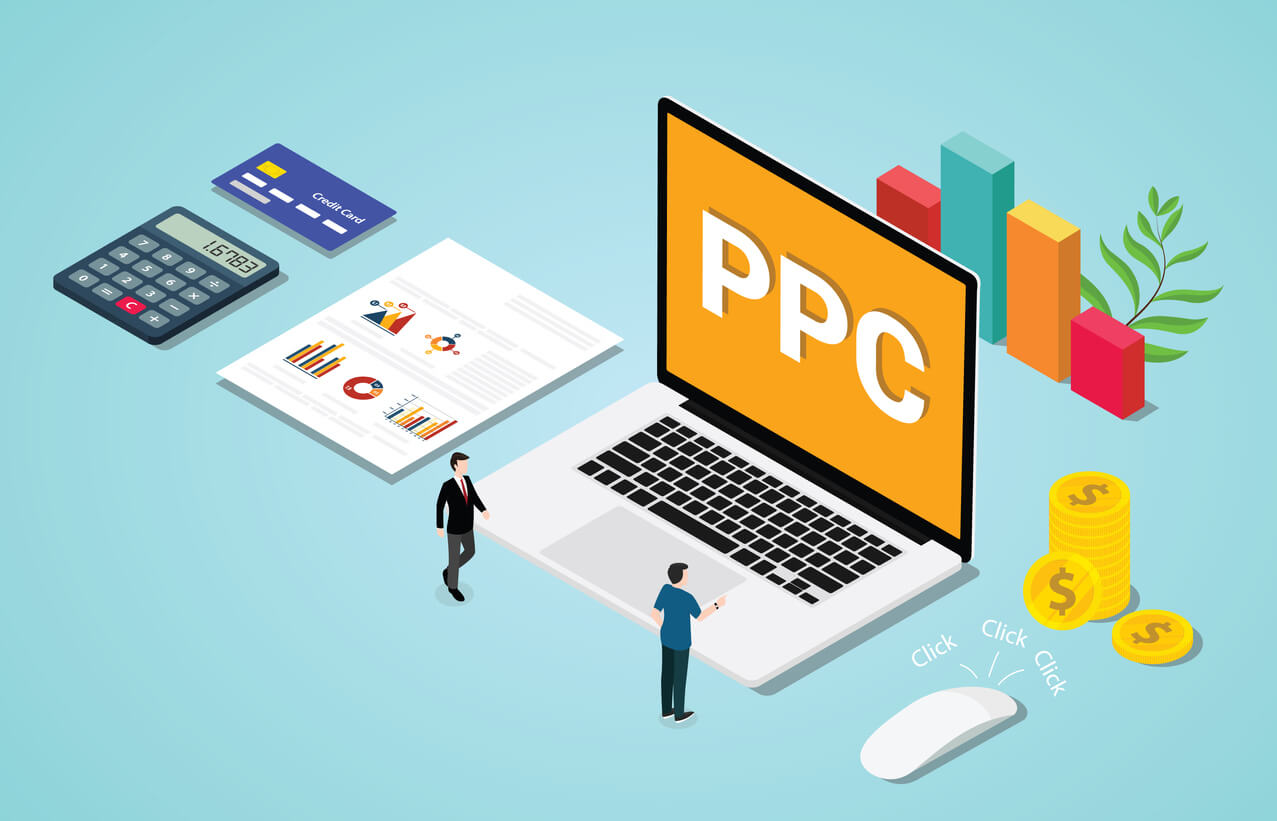
In the ever-evolving landscape of digital marketing, the role of eCommerce PPC (Pay-Per-Click) has become increasingly pivotal. Recent trends suggest that PPC can significantly enhance online visibility, with studies indicating that PPC visitors are 50% more likely to make a purchase than organic visitors. This shift underscores the growing importance of selecting the right eCommerce PPC agency.

October 3, 2023
When it comes to eCommerce, getting visitors to your site is just the first hurdle. According to a study by the Baymard Institute, the average online shopping cart abandonment rate is nearly 70%. This means that 7 out of 10 visitors who add an item to their cart will leave without completing a purchase.

September 30, 2023
In today's digital age, a strong social media strategy for eCommerce is essential for success. With billions of users across various platforms, social media offers an unparalleled opportunity to connect with customers and drive sales.

September 14, 2023
The Ultimate Guide to a Comprehensive eCommerce SEO Audit

September 12, 2023
In today's digital landscape, businesses place a strong emphasis on two fundamental facets of marketing: getting people to know your brand and making them trust it. These elements play pivotal roles in shaping a company's identity, market positioning, and overall success in a hyper-competitive environment. An SEO audit can be a valuable tool in this context, helping to optimize your online presence for both visibility and credibility.

August 19, 2023
In the fiercely competitive world of eCommerce, where over 93% of online experiences begin with a search engine, success hinges on visibility and choosing the best Magento development company. Search Engine Optimization (SEO) isn't just a marketing buzzword; it's the strategic key that unlocks higher rankings, drives organic traffic, and builds brand credibility.

July 24, 2023
In the fast-paced world of B2B digital marketing services, the landscape has witnessed a transformative shift with the advent of social media. No longer just for reaching consumers, data is increasingly showing that buyers are heading to social to research and engage with vendors. In fact, 75% of B2B buyers use social media to support their purchase decision, according to recent data.

January 30, 2023
Google Universal Analytics (UA) is set to stop collecting data on July 1st, 2023, which means that companies need to start planning for the move to GA4 (Google Analytics 4) now. While UA will still be available for six months after that date, historical data won't be available. This means that it's crucial for companies to start planning for the migration to GA4 now to ensure that they don't lose any valuable data.

August 10, 2022
Remember just ten years ago when on any given Saturday people filled malls to socialize and shop all day? Shoppers of today have shifted gears in how they like to socialize and shop, and it’s no shock to learn that social media is the preferred outlet. And while the effects of Covid might have jump-started this process, it will have a lasting effect on future consumer shopping habits.

February 23, 2022
Pay-per-click (PPC) is a moving target and one that can no longer be ignored by merchants. Without having a PPC budget you are leaving growth opportunities and a competitive advantage on the table, something that can’t afford to be done this year. On the flip side, with an effective and optimized PPC strategy, your brand will reap the benefits of improving your larger ongoing strategy which can lead to increased sales, brand recognition, and improved customer loyalty.

March 2, 2026
Echidna will be at Boomi World 2026 in Chicago. As a Boomi partner with 16+ years of integration experience, we work with B2B commerce organizations to design and implement the integrations that keep operations moving — from ERP and EDI to CRM, PIM, OMS, and modern commerce platforms.

March 15, 2025
March 2025: Your Monthly Digest of Top Digital Commerce Insights

February 11, 2025
February 2025: Your Monthly Digest of Top Digital Commerce Insights

January 15, 2025
January 2025: Your Monthly Digest of Top Digital Commerce Insights

January 7, 2025
The NRF 2025 Big Show is packed with innovation, inspiration, and strategies to shape the future of retail. With so many sessions to choose from, it can be tough to decide where to focus your attention. That’s why we’ve rounded up three of the most exciting, game-changing sessions you simply can’t miss. These discussions bring together retail leaders, digital visionaries, and industry disruptors who are reshaping the way we do business.
December 18, 2024
December 2024: Your Monthly Digest of Top Digital Commerce Insights

November 19, 2024
November 2024: Your Monthly Digest of Top Digital Commerce Insights

October 16, 2024
October 2024: Your Monthly Digest of Top Digital Commerce Insights

September 18, 2024
September 2024: Your Monthly Digest of Top Digital Commerce Insights

August 15, 2024
August 2024: Your Monthly Digest of Top Digital Commerce Insights

July 8, 2024
July 2024: Your Monthly Digest of Top Digital Commerce Insights

July 3, 2024
The automotive industry is undergoing a major shift, driven by rapid advancements in digital technology. This transformation is reshaping how vehicles are manufactured, marketed, sold, and serviced. From AI-driven manufacturing processes to sophisticated online sales platforms, automotive eCommerce is becoming the backbone of modern automotive operations. This shift is not just a trend but a necessity for survival and growth in an increasingly competitive market.